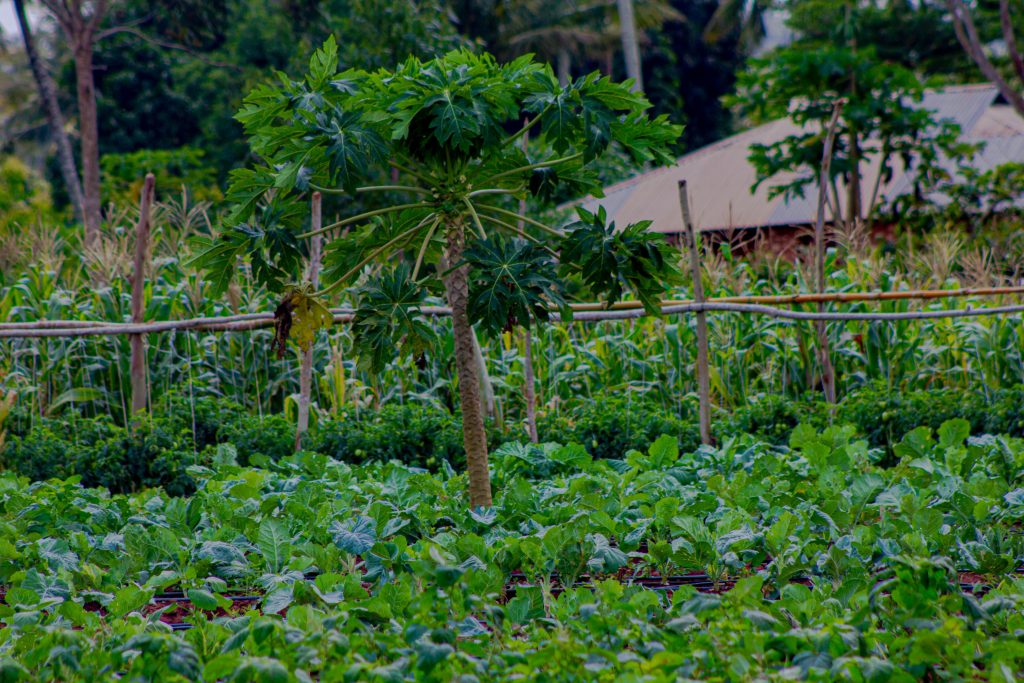
The Intensive Agroforestry Farming Project focuses on the Sokoke community within Kilifi County, targeting 500 vulnerable individuals across nine locations, including Kayafungo, Giriama, Mwabaya Nyundo, Dida, Matano Manne, Vitengeni, Kavuluni, Dulukiza, and Shambwoni. Organized into 20 groups of 25 members, these farmers focus on the cultivation and processing of Moringa (Mdzungi), a drought-tolerant crop historically used for nutrition and water purification. Over a two-year implementation period, participants receive hands-on training in soil conservation, crop management, animal feed processing, product certification, and group microfinance management to build sustainable enterprises around the moringa value chain.
Complementing this local focus, the broader Regenerative Agriculture Consortium (CAM-RA) spans eight counties: Kwale, Mombasa, Kilifi, Taita-Taveta, Machakos, Tharaka Nithi, Laikipia, and Nyeri. Reaching 500 direct beneficiary households across 12 communities, this program focuses on restoring soil health, sequestering carbon, and optimizing water efficiency. Key practices include minimum tillage, Zai pit construction for drought resilience, multi-storey kitchen gardening using recycled materials, and zero-waste crop-livestock integration. Farmers also learn to build vermicomposting units and formulate organic bio-pesticides and fertilizers from locally sourced natural ingredients.
The combined efforts have yielded measurable impact across all participating regions. Over 14,100 fruit and indigenous trees have been planted to combat land degradation, supported by six centralized tree nurseries. Furthermore, 598 farmers have undergone kitchen garden training, resulting in 512 active homestead gardens that directly enhance household nutrition. To foster financial independence, 13 Women Self-Help Groups have been established, supported by seed capital disbursements to establish savings-and-lending networks and small-scale livestock ventures. These initiatives were publicly recognized at the 2026 Mombasa ASK Show exhibition for excellence in climate-smart agriculture.
Looking forward, the initiative is expanding its scope to ensure long-term sustainability and economic growth. Key priority areas include introducing community-based value addition—such as vegetable drying, preservation, and branding—to reduce post-harvest losses and open new institutional markets. Additionally, the project is integrating digital farming applications and mobile-based record-keeping tools for self-help groups to facilitate seamless linkages with formal microfinance institutions. Youth-led demonstration plots and structured inter-county exchange visits will continue to drive innovation and cross-learning across the grassroots network.